Khinkali is one of the most beloved dishes of Armenian and Caucasian cuisine. However, even the highest-quality khinkali can lose their signature juiciness if cooked improperly. Here is our step-by-step guide to boiling frozen khinkali so they keep their shape and rich flavor.
Step 1: Bring Plenty of Water to a Boil
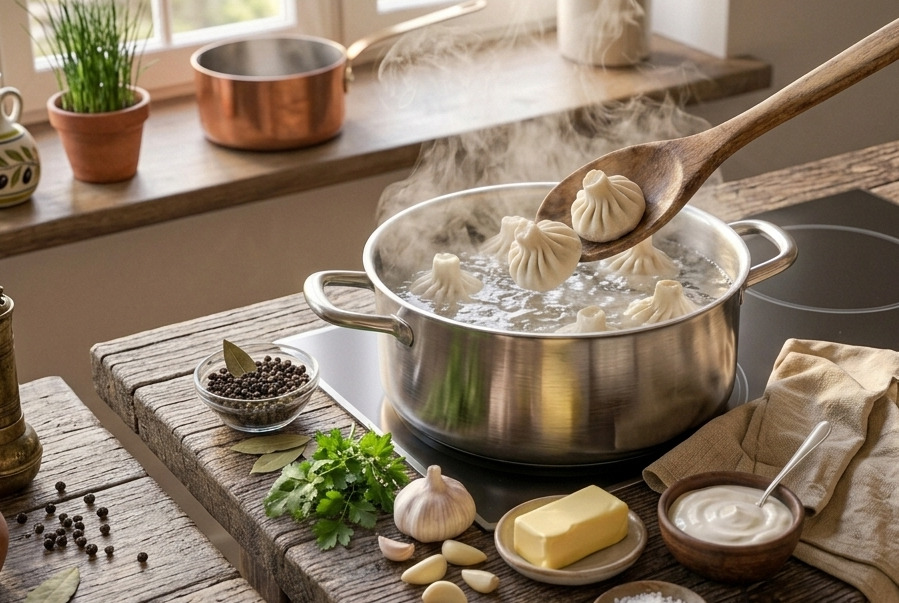
Fill a large pot with water—roughly 3–4 liters of water per 1 kg of khinkali. Bring it to a rolling boil so the dumplings do not stick together.
Step 2: Add Salt and Spices
Add 1 tablespoon of salt per 3–4 liters of boiling water. Optionally, add a bay leaf and whole black peppercorns to enrich the aroma.
Step 3: Do Not Thaw Before Cooking
This is one of the most common mistakes. Never thaw frozen khinkali beforehand. Stir the boiling water to create a gentle swirl and drop the frozen khinkali in directly. This keeps the dough firm and locks in the broth inside.
Step 4: Stir Gently
During the first 1–2 minutes, stir gently with a wooden spoon so the khinkali do not stick to the bottom of the pot.
Step 5: Cooking Time
Once the khinkali float to the surface, continue boiling for another 8–10 minutes (for medium-sized khinkali). Avoid overcooking, as the dough can become overly soft.
How to Serve
Khinkali pair best with:
- melted butter
- sour cream or matzoon (yogurt)
- garlic sauce
- freshly cracked black pepper
You can also serve them alongside fresh herbs and a crisp vegetable salad.
Common Mistakes to Avoid
- Thawing khinkali before boiling
- Using too little water
- Placing dumplings into cold water
- Skipping the gentle stir in the first minutes
- Boiling for too long
Why Choose Gayane’s Kitchen Khinkali
At Gayane’s Kitchen, our khinkali are handmade from fresh local meat using traditional recipes without preservatives. Quick freezing preserves their natural taste, texture, and juiciness until they reach your table.
Frequently Asked Questions (FAQ)
Should I thaw khinkali before cooking?
No. Always boil them directly from frozen.
How long do they take to cook?
On average, 8–12 minutes after floating to the surface.
Why do khinkali tear?
The main causes are prior thawing, overcooking, or insufficient boiling water.
Can I cook them in an Air Fryer?
For classic khinkali, boiling is strongly recommended, as an Air Fryer alters the dough texture.